صورة المنتج
غير متوفرة
اضغط للتكبير
الخدمات المتاحة
التدريب على استخدام النظام
تدريب عملي للمستخدمين على استخدام النظام وتشغيل وظائفه الأساسية بكفاءة.
300.00
الحد الأدنى للموظفين: 3
التدريب على التدقيق الداخلي
تدريب على آلية التدقيق الداخلي، إعداد القوائم، جمع الأدلة، وتوثيق عدم المطابقة وخطط التحسين.
300.00
الحد الأدنى للموظفين: 3
التدريب على متطلبات النظام
شرح متطلبات النظام والسياسات والإجراءات اللازمة لتشغيله وتطبيقه بالشكل الصحيح.
300.00
الحد الأدنى للموظفين: 3
طلب إعداد وثائق
إعداد وثائق مخصّصة للعميل تُصمَّم بعناية وفق طبيعة نشاطه ومتطلباته، ومُعدّة خصيصًا باسمه التجاري وهويته البصرية، بما يضمن تنظيمًا احترافيًا يعكس علامته التجارية ويعزز موثوقيته.
5,000.00
Environmental Management System ISO 14001-2026 (Transportation and Logistics Sector)
1,150.00
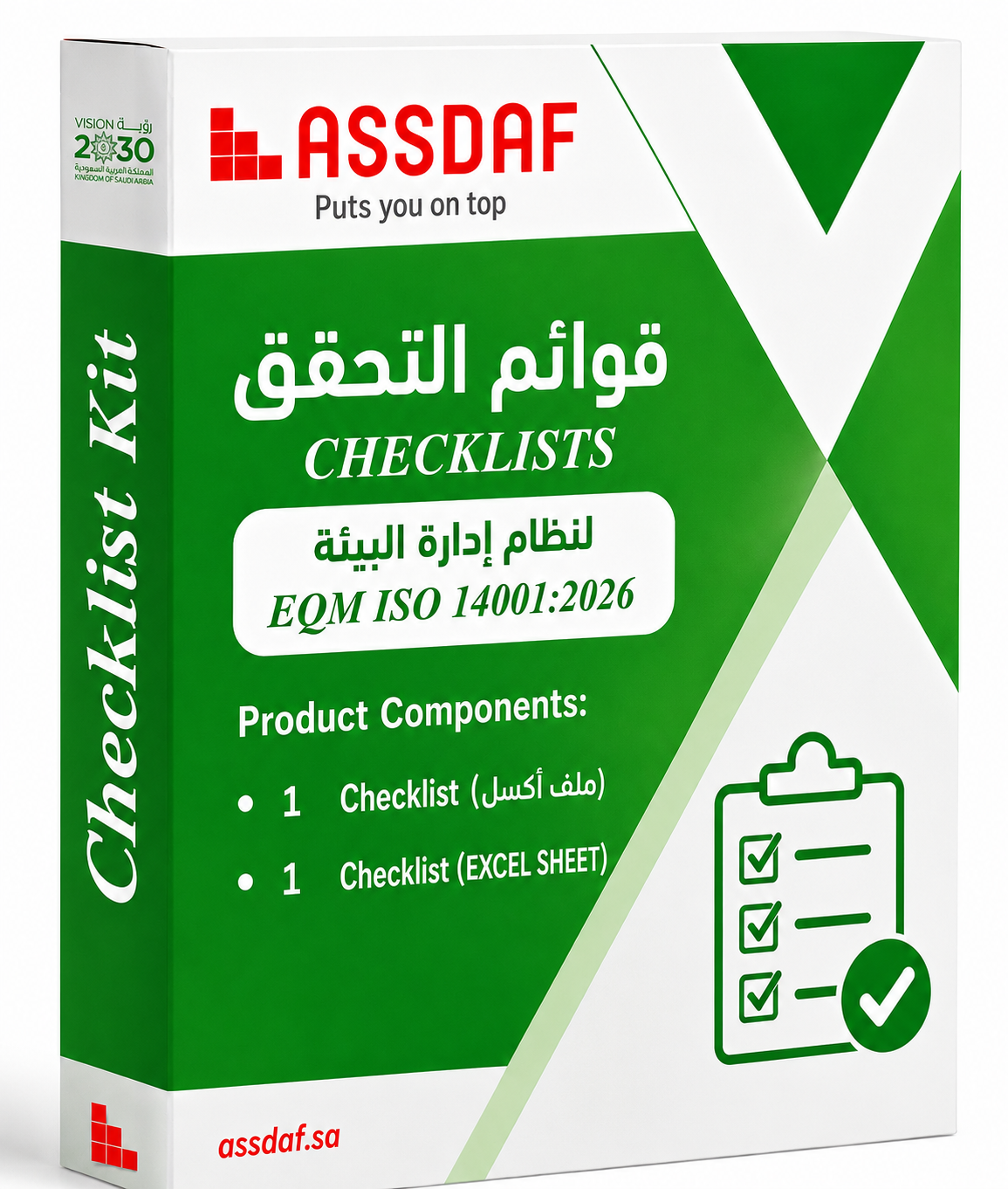
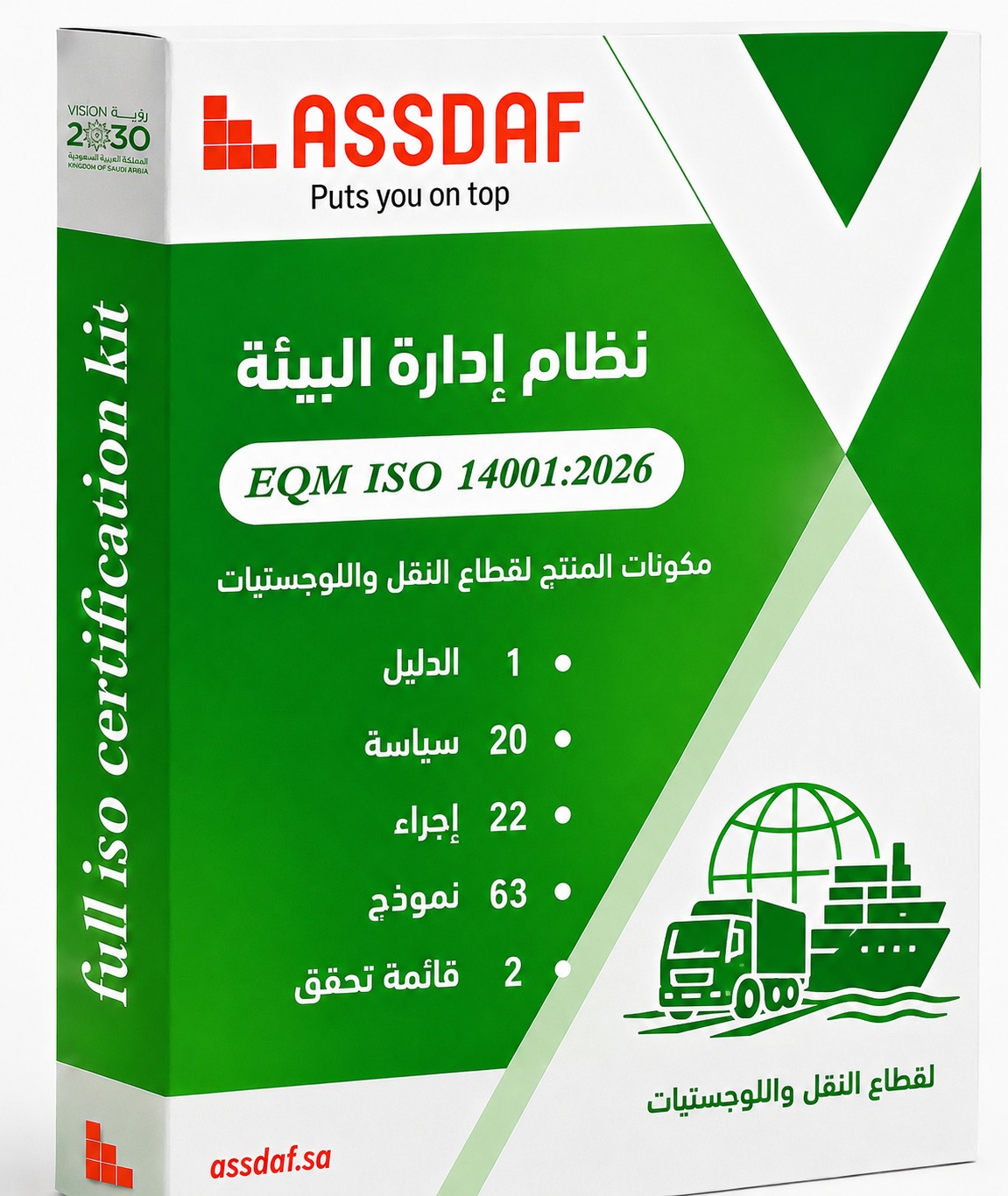
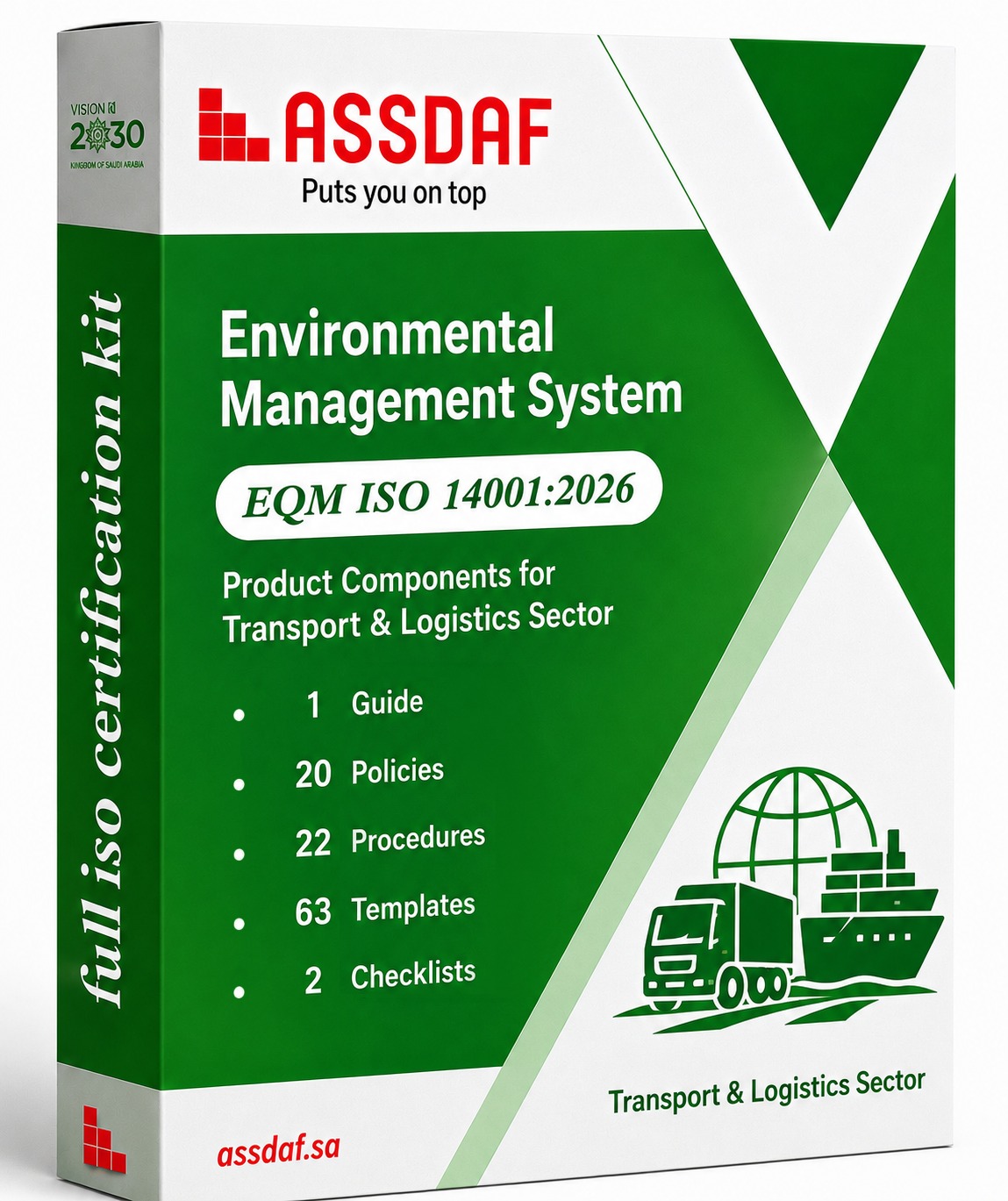
Environmental Management System (EMS) for the Transportation and Logistics Sector – ISO 14001:2026 — enables transportation companies, logistics providers, supply chain operators, distribution centers, and warehousing organizations to manage environmental aspects of operational and logistics activities, minimizing impacts from transportation, storage, handling, and distribution. Covers fuel/energy management, emissions/waste/pollution control, environmental awareness for drivers and operational teams. Includes environmental policy, aspects/impacts register, risk assessment, emission/waste control procedures, emergency plans for spills/leakages, inspection forms for vehicles/warehouses, compliance records, training programs, KPI reports, fuel/energy/water conservation plans. Saves up to 50% of consulting costs. Editable Word files. Save weeks of preparation and get a complete, ready-to-implement EMS for the transportation and logistics sector, in minutes.
هذا منتج رقمي غير قابل للاسترجاع بعد التحميل.اطّلع على سياسة الاسترجاع
وصول سريعتسليم رقمي سريع للملفات
بدعم استشاريخبراء متخصصون بجانبك
مدفوعات آمنةتجربة دفع محمية
Environmental Management System ISO 14001-2026 ( Transportation and Logistics Sector)
The Environmental Management System (EMS) for the Transportation and Logistics Sector, based on the International Organization for Standardization (ISO) 14001:2026, is an advanced managerial and operational framework designed to enable transportation companies, logistics service providers, supply chain operators, distribution centers, and warehousing organizations to effectively manage environmental aspects associated with their operational and logistics activities. The system aims to minimize environmental impacts arising from transportation, storage, handling, and distribution activities while ensuring sustainability and compliance with applicable legal and regulatory requirements, in accordance with the latest edition of ISO 14001:2026.
The system has been carefully developed to align with the nature of the transportation and logistics sector and its diverse operational, field, technical, and administrative activities. It covers all key elements of environmental management within transportation companies, warehouses, and logistics centers, starting from environmental context analysis and the identification of risks and opportunities, through planning, operational control, and environmental management of fleets and logistics facilities, and extending to monitoring, evaluation, and continual improvement. The system includes a comprehensive package of policies, procedures, forms, and operational records reflecting international best practices in environmental management for transportation and logistics organizations.
The system helps transportation and logistics organizations to:
- Enhance environmental compliance and reduce violations associated with transportation, warehousing, and distribution activities.
- Improve fuel, energy, and resource management across fleets and logistics facilities.
- Control environmental emissions, operational waste, and pollution resulting from logistics operations.
- Improve workplace environmental conditions within warehouses, distribution centers, and operational facilities.
- Support sustainability initiatives and corporate environmental responsibility programs.
- Increase organizational readiness for environmental certifications, accreditations, and sustainability ratings.
- Enhance environmental awareness among employees, drivers, operational teams, and technical personnel.
- Strengthen corporate reputation and increase confidence among customers, regulators, and business partners.
Key Features of the System:
- Fully compliant with the latest requirements of ISO 14001:2026.
- Specifically designed for the transportation, logistics, and supply chain sector.
- Applicable to road, maritime, and air transportation companies, warehouses, distribution centers, freight forwarding companies, and logistics service providers.
- Developed using practical and professional operational language suitable for logistics, transportation, and administrative environments.
- Includes integrated and customizable policies, procedures, forms, and records tailored to the nature of logistics organizations.
- Helps reduce consultancy and EMS implementation costs by up to 50%.
- All documents are provided in editable Microsoft Word format, allowing customization and continuous development according to organizational needs.
The system includes a comprehensive set of documents and records, such as:
- Environmental Policy for Transportation and Logistics Organizations.
- Environmental Aspects and Impacts Register for transportation, storage, and distribution operations.
- Environmental Risks and Opportunities Assessment for fleets and logistics facilities.
- Procedures for controlling emissions, waste, and environmental pollution arising from operational activities.
- Emergency Preparedness and Response Plans for environmental incidents, spills, and leakages during transportation and storage.
- Environmental inspection and monitoring forms for vehicles, warehouses, and operational facilities.
- Environmental compliance records and periodic evaluation reports for logistics operations.
- Environmental training and awareness programs for employees, drivers, and operational teams.
- Environmental performance indicators and continual improvement reports.
- Fuel, energy, and water conservation plans for logistics facilities and operational sites.
This system represents a comprehensive and professional solution for transportation and logistics organizations seeking to improve environmental performance, achieve sustainability objectives, and enhance the efficiency of operational and logistics processes. It supports competitiveness, facilitates international certification and accreditation, and contributes to establishing a sustainable, safe, and environmentally responsible operating environment in line with global best practices.
اكتشف المزيد
باقات وثائق ذات صلة
باقات مكملة لتعزيز برنامج الامتثال لديك.